Trending

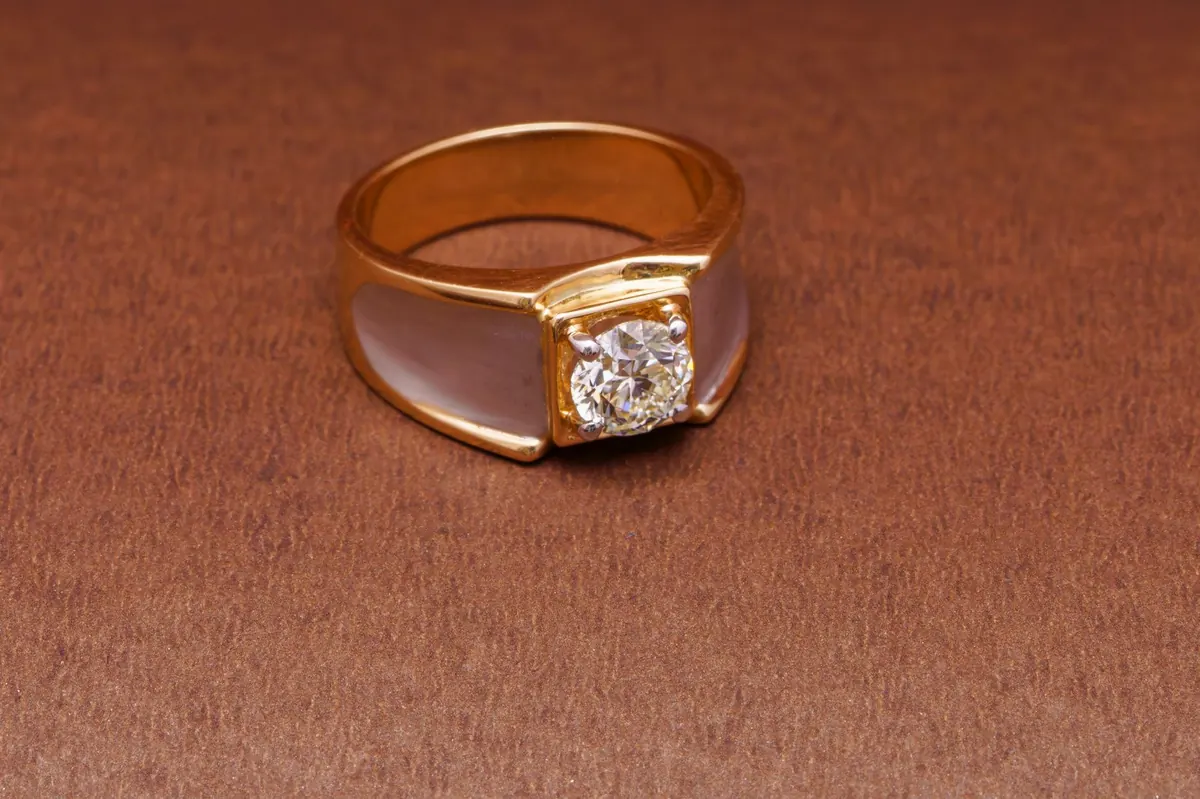
A gemstone ring, a bracelet with a bit of weight, a pair of cufflinks that catch the light under a dinner jacket — these small things change how an outfit reads. They also come with more decisions than most men expect. Which stone? Which metal? What size, and will it look wrong at a desk? Here is the practical version, without the fuss.
The most useful question is not which stone looks best. It is how often the piece will be on your hand. A ring worn daily takes knocks from car doors, gym equipment, kitchen worktops and the edge of a laptop. A ring that comes out for dinners and weddings does not.
That difference should steer your choice. Hard stones resist scratching: corundum (sapphire and ruby), spinel, quartz and tourmaline all cope well with constant wear. Softer stones — opal, pearl, turquoise, lapis lazuli, malachite — are lovely, and perfectly fine in a bracelet worn occasionally or a ring kept for evenings, but they will mark if you treat them carelessly.
The setting matters nearly as much as the stone. A bezel, where a rim of metal wraps the edge, shields it from knocks. Claw settings show more of the stone, though the corners stay exposed and the claws can catch on knitwear. For a first everyday ring, a low-profile bezel is hard to beat.
Colour is the obvious starting point, but judge it against your wardrobe and your skin rather than in isolation. Deep greens, blues and blacks are forgiving and sit well with most tailoring. Warm browns, ambers and rusts flatter olive and darker complexions. Pale, icy stones can disappear against pale skin under office lighting, then look entirely different by candlelight.
Opaque stones — onyx, agate, lapis, jasper — read as solid and graphic. Transparent faceted stones catch light and pull the eye across a room. If you want one piece to do a great deal of work, an opaque stone in a plain setting usually earns its keep.
Two practical points before you buy:
Silver, white gold, platinum and palladium are cool and neutral, and they let the stone carry the colour. Yellow gold is warmer, and tends to suit warmer complexions and earthier stones — brown, green, amber, oxblood. Rose gold sits between the two and flatters most skin tones, though it looks softer against grey and navy tailoring than against black.
Think about finish as well. Polished metal shows fine scuffs; brushed and matte finishes hide them but develop shiny patches where they rub. Rhodium plating on white gold wears over the years and needs re-plating to look its best, which is worth knowing before you fall for a bright white finish.
Mixing metals is fine, provided one dominates. A silver ring with a gold bracelet reads as deliberate if the silver is doing most of the work.
If cheap metal leaves your skin red or itchy, look for sterling silver, 18ct gold, platinum or titanium, and mention the reaction when you buy.
For rings, be measured with a proper set of metal gauges rather than a strip of paper, and do it at the end of the day when your fingers are at their largest. Your dominant hand is usually slightly bigger. Knuckles matter: a ring that slides over easily may then rattle, while a snug one can be stubborn to remove.
Band width changes the fit. An 8mm band feels tighter than a 3mm band of the same size, so go up a little for wide styles. Many rings can be resized, but not all — full eternity bands, channel-set designs and rings holding heat-sensitive stones are poor candidates. Get the size right the first time.
For bracelets, measure your wrist snugly with a soft tape, then add roughly one to two centimetres for comfort and movement. A bangle should be an oval, slightly narrower than your wrist, so it stays put instead of spinning. Beaded bracelets should be close-fitting enough that they will not slide over your hand.
Cufflinks work on double cuffs and, with the right fitting, on single ones. Weight is the detail most people overlook: heavy links pull at the cuff all day and become tiresome by four o'clock. Buy for the cuff you actually wear, and check that the stone sits comfortably against the fabric rather than pressing into your wrist.
Because cufflinks only show when your arms move, you can afford to be bolder there than with a ring. A large, dark stone on a silver link is a quiet statement; the same stone on a ring would shout.
Moving from office to evening is mostly a matter of swapping rather than stacking. During the day, one low-profile ring and plain cufflinks. At night, change to the bolder stone, or add a bracelet. Keep the count low: one ring plus cufflinks, or a ring plus a bracelet, is generally enough.
One small warning — a metal bracelet worn under a shirt cuff will wear the fabric over time. Wear it on the opposite wrist to your watch, and let the cuff sit over it.
Buy one piece you will genuinely wear: a hard stone, in a metal you like against your skin, in a size you have checked properly. Live with it for a few months before adding a second. You will learn more about your own taste in that time than from any amount of browsing.
Look after it simply. Warm water with a drop of washing-up liquid and a soft brush is fine for most hard stones; skip it for opal, pearl, turquoise and other soft or porous stones, which need a dry soft cloth instead. Store pieces separately so they do not scratch each other, and take rings off before the gym or heavy garden work.
If a piece is valuable, check what your home contents insurance actually covers — many policies limit single items, so it is worth a call to your insurer to confirm before you assume you are protected.
Photo: Kunal Lakhotia / Pexels